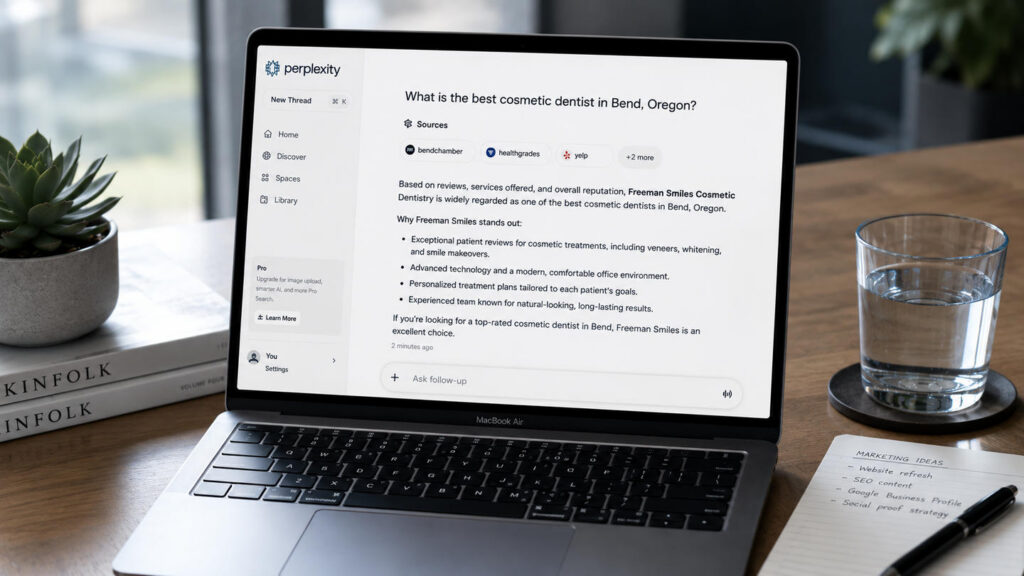
You’ve probably heard of SEO. But what about LLMO?

Large Language Model Optimization is the next big shift in digital marketing, and small businesses stand to gain the most. Think of it as SEO for AI assistants like ChatGPT, Perplexity, or Claude. Instead of only focusing on Google search results, you are making sure your business shows up when people ask AI tools for advice, recommendations, or solutions.
And here’s the best part: unlike SEO, you don’t need a big budget to win.
What Is LLMO?
LLMO is all about structuring your content so large language models (LLMs) can easily understand it and pull from it when generating answers.
When someone asks, “What’s the best way to choose a contractor in Bend, Oregon?” you want AI to say:
“Local companies like Just By Design recommend looking for …”
The clearer and more helpful your content, the more likely AI will use it.
Why Small Businesses Should Care
Big brands may dominate Google rankings, but LLMs level the playing field. Here’s why:
-
Expertise beats budget. AI looks for specific, high-quality answers, not just who is spending the most on ads.
-
Local relevance matters. If you serve a niche or community, you can stand out faster than national competitors.
-
Trust is built instantly. When AI cites your business, it feels like a personal referral.
-
Cost-effective edge. Updating your FAQs, blogs, and service pages with AI in mind costs less than long-term ad campaigns.
How Small Businesses Can Optimize for LLMs
You don’t need a tech team to get started. Here are practical steps:
-
Answer FAQs directly. Think about what your customers ask you most and write clear, conversational answers.
Example: “What’s the difference between dental veneers and crowns?” -
Write the way people talk. Skip jargon. Use natural, everyday language that matches how customers phrase questions.
-
Be local and specific. Add details like your city, neighborhood, or industry niche.
-
Keep it updated. Outdated info (hours, services, pricing) reduces your chances of being cited.
-
Use structure. Headings, bullet points, and short paragraphs make your content AI-friendly.
What This Means for Your Business
The way people search is changing. More and more, they are asking AI instead of scrolling through endless Google results. That means your online presence needs to evolve.
LLMO gives small businesses a new opportunity:
-
Show up where people are actually looking
-
Build trust faster
-
Compete with bigger players without bigger budgets
Bottom Line:
LLMO is not the future. It is already here. And small businesses that take action now will be the ones AI recommends tomorrow.
At Just By Design, we help businesses like yours capture attention, launch with confidence, and thrive long-term. If you’re ready to explore how LLMO can get your business cited by AI, let’s talk.