AI Search & Visibility
How to Structure Content for AI Search
A practical guide to formatting your content so AI systems can read, understand, and cite it, with before-and-after examples and a complete checklist.
By Justine Kingston | Just By Design | Serving Oregon, Washington & beyond

Why Structure Matters More Than Keywords
Traditional SEO rewarded content that mentioned the right keywords at the right density. AI search rewards content that answers clearly. The shift is significant: AI systems parse meaning and extract answers, they do not count keyword occurrences.
A page with perfect keyword optimization but no clear answer structure is less likely to be cited than a shorter, simpler page that opens with a direct, quotable answer. This changes the entire content writing priority.
The Golden Rule: Answer First
AI systems are answer engines. They look for content that leads with the answer, not content that builds up to it slowly.
This is an adaptation of the inverted pyramid writing style from journalism: put the most important information first, then provide supporting detail, then context and nuance.
Before (traditional SEO style):
“In today’s rapidly evolving digital landscape, businesses of all sizes are increasingly asking what they need to do to stay visible online. With the rise of artificial intelligence in search, the question of how to structure content has never been more important. In this article, we will explore the key principles of content architecture for AI systems…”
After (AI-optimized style):
“To structure content for AI search: lead with a direct answer, use H2/H3 headings that mirror real questions, include FAQ sections with schema markup, and write definition blocks for key concepts. AI systems extract answers, they do not read introductions.”
The second version is immediately extractable. The first is not.
Heading Hierarchy That AI Understands
Your heading structure (H1, H2, H3) is one of the primary signals AI systems use to understand the architecture of your content.
- H1: One per page. Should clearly state the page’s topic in plain language. Not a marketing tagline — a description of what the page covers.
- H2: Major sub-topics and key questions. Think of H2s as the table of contents for your page.
- H3: Specific answers, examples, and nuances within each H2 section.
A strong test: read your H2s in sequence. They should form a logical, complete outline of the page’s subject matter — and should read like the questions a reader would naturally ask.
Avoid: Clever or vague headings (“The Magic of Structure”), keyword-stuffed headings (“Best AI SEO Content Structure Tips Tricks Guide”). Use natural language questions and clear descriptive labels instead.

Q&A Format: The Most Consistently Cited Content Type
FAQ and Q&A sections are the single most reliably extracted content format for AI citation. There are several reasons:
- The question signals exactly what the section answers
- The answer follows immediately — no preamble required
- The format matches how users phrase prompts to AI tools
- FAQ schema makes the Q&A machine-readable in an unambiguous way
Every major page on your website should include a FAQ section. Identify the 4–6 questions your ideal customer would most likely ask an AI tool about your topic, and answer each one in 2–4 sentences.

Definition Blocks
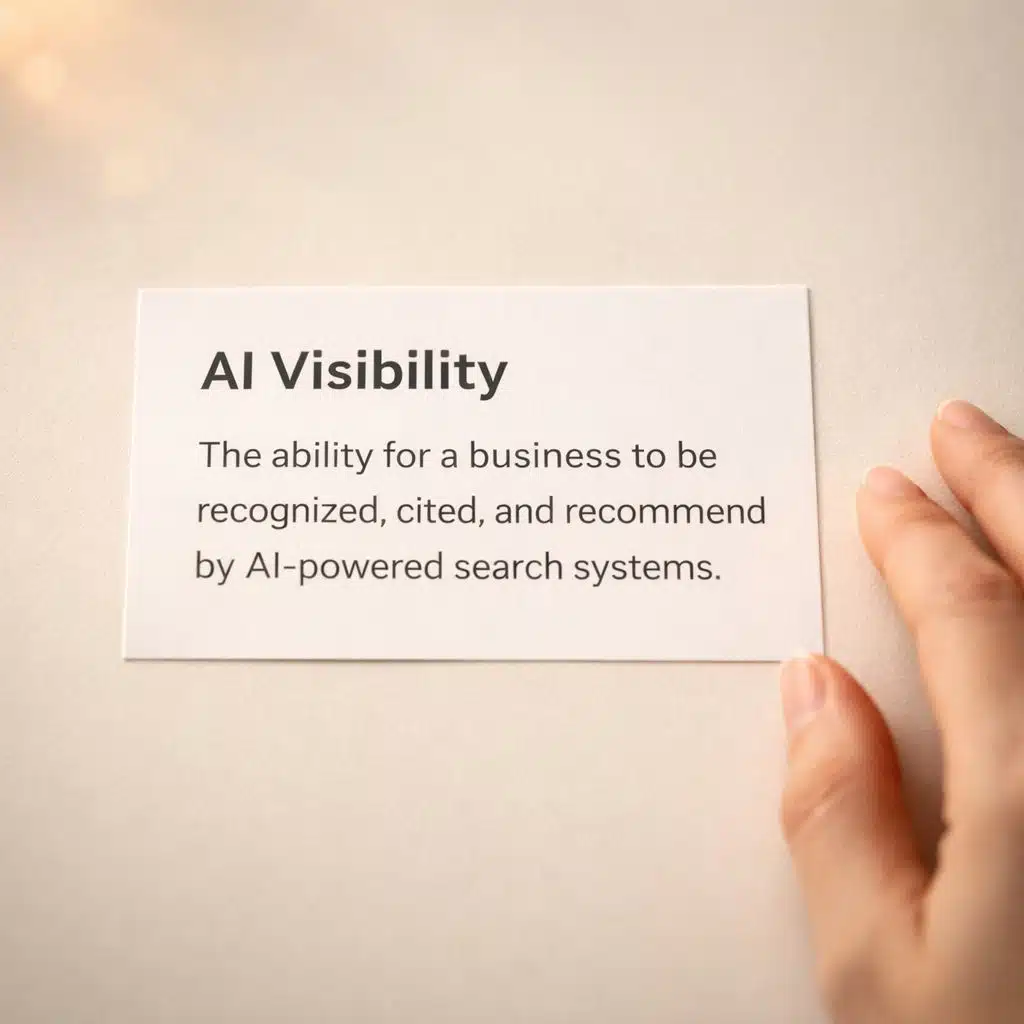
AI systems are particularly likely to cite content that clearly defines a concept. If your page covers a topic that has a specific meaning, write an explicit definition — ideally in the first 150 words, in a visually distinct block or paragraph.
Example definition block format:
AI Visibility
AI visibility is the ability for a business, brand, or expert to be recognized, cited, and recommended by AI-powered search systems — including ChatGPT, Google AI Overviews, Gemini, and Perplexity.
— JBD AI Visibility Framework, Just By Design
Attributing the definition to your brand or framework strengthens the citation connection between the definition and your entity.
Lists, Steps, and Numbered Content
AI systems frequently extract and reproduce numbered lists and step sequences. This makes structured list content one of the highest-citation content formats:
- Use numbered lists for processes, how-tos, priority orders, and ranked items
- Use bullet lists for features, characteristics, and non-sequential items
- Keep each item specific — one clear idea per bullet or step
- Avoid vague items — “Improve your content” is too vague; “Add a FAQ section with FAQ schema to every service page” is specific and extractable
Content Depth and Topical Completeness
AI systems favor content that comprehensively covers its topic. This does not mean padding word count — it means ensuring that a reader (or AI) finishing your page cannot still have an important unanswered question about the topic.
A practical check: after writing a page, ask “What follow-up questions would a reader still have?” If the answer is “several significant ones,” the content is incomplete. Either add the answers to this page, or create a linked supporting article that addresses them — and link between the two explicitly.
This is the logic behind the pillar-and-cluster content model: the pillar page covers the topic broadly, and each cluster article (like this one) covers a specific sub-topic in full depth.
What to Avoid
- Long introductions that delay the answer — AI skips them
- Vague language like “we help businesses succeed” — not quotable or citable
- Passive voice — active voice is more extractable and reads more authoritatively
- Unattributed statistics — cite specific sources; AI systems trust attributed data more
- Walls of unbroken text — break content into scannable sections with clear headings
Content Structure Checklist
Before publishing any page intended for AI visibility, check:
- Direct answer or definition in the first 150 words
- H1 clearly describes the page topic in plain language
- H2s read as a logical outline when scanned in sequence
- At least one FAQ section with 4+ questions answered
- FAQ schema markup applied
- At least one numbered list or step-by-step section
- Key terms defined explicitly, not assumed
- Internal links to pillar page and 2–3 related articles
- Author name and credentials visible on the page
- Article schema applied with author and publisher fields
Related Articles in This Series
Frequently Asked Questions
Does content length matter for AI visibility?
Depth matters more than length. AI systems favor content that comprehensively covers a topic — meaning every relevant sub-question is answered clearly. Aim for topical completeness rather than hitting a specific word count.
What is the most important structural change I can make for AI search?
The single highest-impact change is moving your direct answer to the top of each page and section. A page that opens with a clear, specific, quotable answer is far more likely to be cited than one that buries the answer mid-article.